 By Ademm on
December 11, 2025
By Ademm on
December 11, 2025 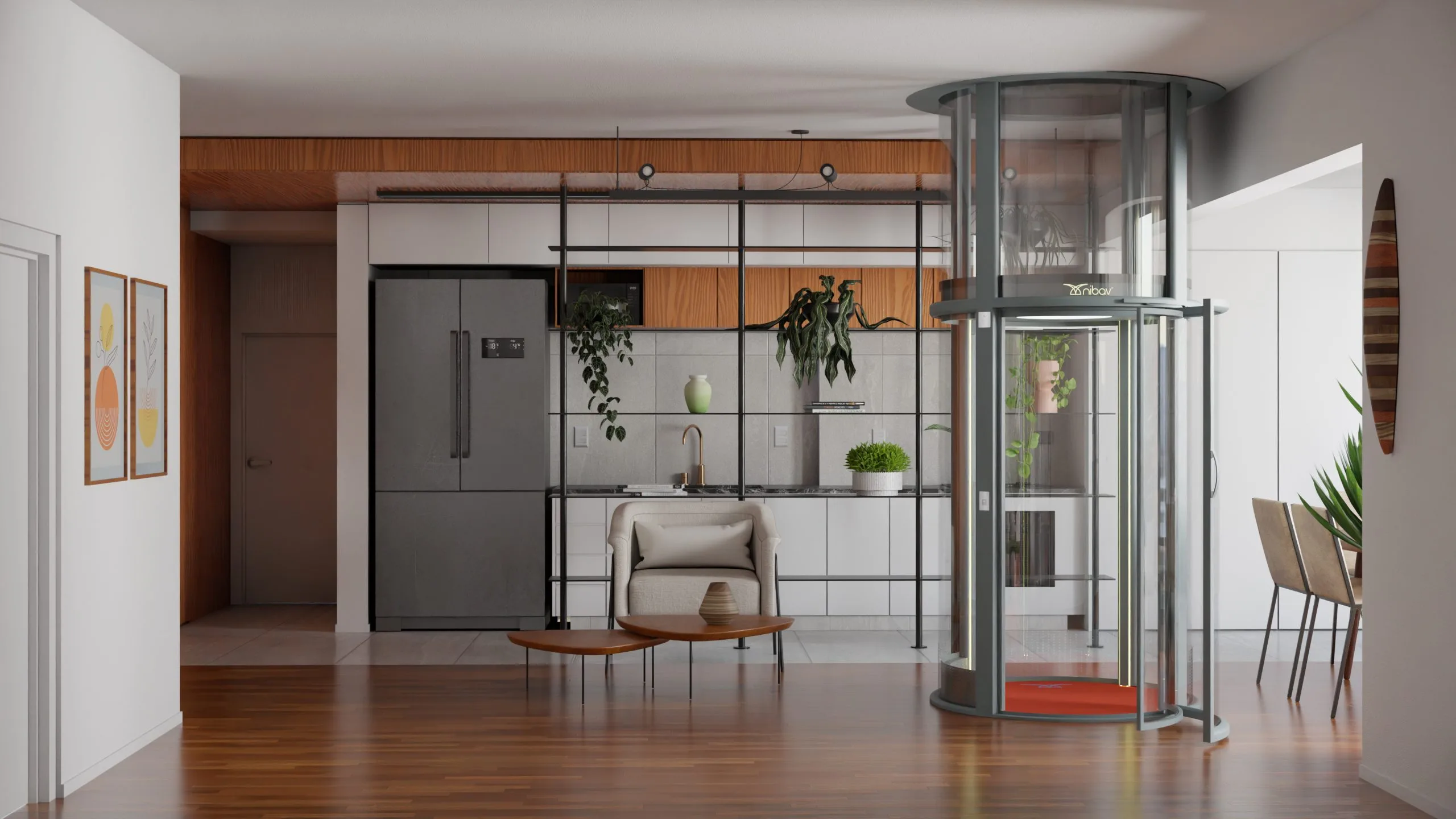
Within Mexico’s modern architecture that focuses on family living, home elevators have now gone beyond only the luxury penthouse or upscale villa. From Guadalajara to Monterrey and Mexico City, homeowners are discovering how a home elevator can help them facilitate access to their home, improve overall safety, and enhance the design of their space.
When it comes time to decide on the right type, a common question is: Should I install a pneumatic home elevator or a traditional home elevator?
Both systems have their advantages, but the difference is subjective based on the type of home you have, what you care more or less about (space, efficiency, design, or sustainability), and how much of a construction project you want to take on.
Let’s take a closer look at pneumatic vs. traditional home elevators in Mexico, which will help you make an informed decision for your dream home.
Table of Contents
- pneumatic vs. traditional home elevators in Mexico
- 1. Understanding the Types of Elevators
- Pneumatic Home Elevators (Air-Driven Elevators)
- Conventional Elevators (Traction Systems & Hydraulic)
- 2. Space and Construction Requirements for Installation
- Pneumatic Elevators
- Conventional Elevators
- 3. Sustainable Energy Consumption
- Pneumatic Elevators
- Traditional Elevators
- 4. Style and Aesthetics
- Pneumatic Elevators
- Traditional Elevators
- 5. Maintenance and Durability
- Pneumatic Elevators
- Conventional Elevators
- 6. Safety and Reliability
- Pneumatic Elevators
- Traditional Elevators
- 7. Cost Analysis: Short-Term vs. Long-Term Value
- Pneumatic Elevators
- Traditional Elevators
- 8. What Is More Beneficial for Homes in Mexico?
- 9. Nibav Home Lifts – Leading the New Generation of Elevators in Mexico
- Main Features:
- 10. Final Decision: Pneumatic Elevators Are the Future
- Conclusion: Elevate Your Lifestyle Smarter
pneumatic vs. traditional home elevators in Mexico
1. Understanding the Types of Elevators
It’s valuable to understand how both elevator types work before comparing their features.
Pneumatic Home Elevators (Air-Driven Elevators)
Pneumatic elevators (like Nibav Home Lifts) operate based on air pressure differences that move the cabin between floors. These lifts are typically situated within a transparent cylindrical shaft powered by vacuum suction for ascension and a controlled release of air for descent.
Here are a few highlights:
- No oil and cables necessary
- Minimal electricity usage
- No pit, shaft, or machine room required
- Compact and panoramic design
These elements make them a great fit for residential purposes in modern Mexican homes, emphasizing both aesthetics and efficiency.
Conventional Elevators (Traction Systems & Hydraulic)
Conventional elevators can be classified into two systems:
- Hydraulic systems, which operate using oil and pistons to push the elevator car up and down, or
- Traction systems, which use cables attached to pulleys and counterweights.
Conventional elevators have been around for decades and are the typical systems found in commercial buildings and some high-end residences. However, they take up considerable space and require higher servicing and maintenance costs.
2. Space and Construction Requirements for Installation
Pneumatic Elevators
Pneumatic lifts are self-supporting units, meaning they do not need to be affixed to any external structural frameworks.
- No pit or shaft: They can be located on any floor and installed directly above it.
- No machine room: The system is encased and contained within the elevator unit itself.
- Installation time: Just 3–5 working days, making it ideal for renovations or homes that are already built.
Air-driven elevators are perfect for homes located in urban cities across Mexico, where retrofitting a conventional elevator would involve major construction.
Conventional Elevators
Most conventional systems require:
- A pit (usually 150–200mm deep)
- A machine room to accommodate motors, hydraulic pumps, etc.
- Reinforced walls or shafts, which involve extensive civil work
- Installation time of 4–8 weeks, or even longer
Conventional elevators are better suited for larger homes or newly constructed properties. However, for existing homes, retrofitting can be costlier and take significantly longer.
Conclusion: Pneumatic elevators are far more convenient for retrofits, offering a cleaner, faster, and non-invasive installation process compared to traditional ones.
3. Sustainable Energy Consumption
Pneumatic Elevators
Pneumatic lifts operate using air pressure and gravity. Energy usage occurs only during upward movement, while the descent relies on atmospheric pressure.
- No energy expenditure on descent: Elevators use energy only while ascending, while gravity powers the descent.
- Single-phase powered: Traditional elevators typically require three-phase electrical service, but pneumatic elevators use standard 110-volt home power.
- No oil or lubrication necessary: Pneumatic elevators use vacuum technology, eliminating the need for grease, oil, or lubricants.
As Mexico places greater emphasis on green building practices, pneumatic elevators represent an eco-friendly and sustainable mobility solution.
Traditional Elevators
Hydraulic elevators consume power during both ascent and descent. They also require oil as part of their main function, which can lead to potential mechanical issues (like leakage) and maintenance concerns (such as oil disposal).
- Consistent energy use: These elevators expend power when moving both up and down.
- Scheduled oil change service: Hydraulic oil must be changed at specific maintenance intervals.
- Higher carbon footprint: With oil usage and disposal, traditional elevators contribute to a greater carbon footprint.
Verdict: Pneumatic elevators clearly win when considering sustainability and overall energy costs.
4. Style and Aesthetics
Pneumatic Elevators
Modern Mexican homes are designed to bring together natural light, minimalism, and open spaces. Pneumatic elevators seamlessly complement this aesthetic, creating a relaxing, modern feel.
- 360° transparent panoramic view: The cabin offers a full panoramic view of the space around it.
- Compact and futuristic design: Pneumatic elevators take up minimal space – less than a typical bathroom.
- Flexible placement: Can be installed in corners or open areas without obstructing the flow of design.
- Custom finishes: Options are available to match the interior décor.
Nibav Home Lifts feature polycarbonate and aluminum cabins that offer a spacious, modern interior without bulky framing or intrusive mechanical parts.
Traditional Elevators
Standard elevators are bulkier and occupy more space. While cabin interiors can be customized with wood or metal finishes, they often feel enclosed and lack the openness of panoramic pneumatic designs.
Verdict: For modern homes seeking elegance and a design statement, pneumatic elevators are the clear winner.
5. Maintenance and Durability
Pneumatic Elevators
- Low maintenance: No oil, gears, or cables are required.
- Fewer moving parts: Reduces wear and tear over time.
- Annual service check: Usually only one maintenance visit per year is needed.
Nibav’s air-driven elevators are engineered for durability, built using European-engineered components, and tested under ISO 9001 and TÜV NORD certifications.
Conventional Elevators
- High maintenance: Requires regular oil checks, lubrication, and mechanical inspections.
- Hydraulic systems can experience oil leaks over time.
- Traction systems require balancing and frequent cable replacements.
Conclusion: Pneumatic elevators require significantly less maintenance, making them ideal for busy households and long-term savings.
6. Safety and Reliability
There can be no compromise when children, the elderly, or guests are at home.
Pneumatic Elevators
- Automatic descent during power failure – The elevator lowers safely to the ground floor.
- Obstruction sensors – Prevent movement if any object or person is detected in the path.
- Child locks and emergency alarms – Provide complete peace of mind.
- Smooth start-stop technology – Ensures a gentle, jerk-free experience.
Nibav elevators adhere to ISO 9001 and TÜV NORD certifications, allowing you to ride with confidence every time.
Traditional Elevators
Hydraulic systems depend on mechanical and electrical components that can deteriorate over time. While safety locks exist, neglecting maintenance can increase risks.
Conclusion: Pneumatic elevators provide superior safety through automatic features and do not rely on oil or heavy mechanical systems.
7. Cost Analysis: Short-Term vs. Long-Term Value
Pneumatic Elevators
- Initial investment: Comparable to entry-level hydraulic lifts.
- Installation cost: Minimal, as no structural work is required.
- Operational cost: Low, due to reduced energy usage and minimal maintenance.
In the long run, pneumatic lifts are the most cost-effective option, offering energy efficiency and minimal upkeep.
Traditional Elevators
- Initial cost: Moderate, but nearly doubles when construction is included.
- Operational cost: Higher electricity and maintenance expenses.
- Lifespan: Long-lasting, but requires consistent servicing.
Final Decision: Pneumatic lifts provide greater long-term savings and faster return on investment.
8. What Is More Beneficial for Homes in Mexico?
Considering housing in Mexico – from luxury properties in Cancún to compact multi-storey homes in Guadalajara – the pneumatic elevator is the most reliable and versatile option.
Here’s why:
- Small and compact: Ideal for urban homes.
- Eco-friendly and energy-efficient: Suitable for environmentally conscious families.
- Quick and easy installation: Perfect for existing structures.
- Safe for everyone: From grandparents to children.
Traditional elevators still hold value for large estates or commercial properties, but for most Mexican homes, Nibav’s pneumatic home elevators stand out as the most reliable option, balancing technology, comfort, and aesthetics.
9. Nibav Home Lifts – Leading the New Generation of Elevators in Mexico
Nibav has transformed the concept of home mobility worldwide – and now, in Mexico, its air-driven elevators are redefining residential design.
Main Features:
- Certifications: ISO 9001 & TÜV NORD certified.
- Environmentally Friendly: Air pressure-powered, with zero oil or counterweights.
- Compact Installation: Occupies just 1.5 m², no pit required.
- Elegant Design: Transparent glass panoramic view.
- Low Maintenance: Annual service only, no lubrication needed.
Nibav aims to provide affordable luxury for families in Mexico, combining Italian design elegance with European precision to deliver engineering excellence that enhances every home.
10. Final Decision: Pneumatic Elevators Are the Future
When comparing pneumatic vs. traditional home elevators in Mexico, the conclusion is clear – pneumatic elevators represent the future of home mobility.
They are:
- Environmentally friendly
- Compact and elegant
- Easy to install
- Safe for all generations
- Affordable to maintain
If you’re a homeowner looking for modern convenience without major construction, Nibav vacuum elevators are the ideal solution.
Conclusion: Elevate Your Lifestyle Smarter
In a country where family and architecture are deeply intertwined, upgrading to a pneumatic home elevator is not just a design choice – it’s a lifestyle decision.
Whether you are renovating a colonial home in Mérida or building a modern villa in Monterrey, Nibav Home Lifts Mexico offers advanced vertical mobility that is sustainable, safe, and sophisticated.
Don’t just go with the flow – experience effortless, elevated living.

Lucia F
Great comparison! This article explains the differences between pneumatic and traditional home elevators so clearly — made it much easier to understand which might fit different homes best.
Eduardo T
Very informative! I liked how the blog covers pros and cons of both types — really helpful for anyone deciding between a modern pneumatic lift and a classic elevator.
Valentina M
Helpful and well-written! The way the features and installation differences are explained makes this guide very useful for homeowners planning an upgrade.