 By Ademm on
December 5, 2025
By Ademm on
December 5, 2025 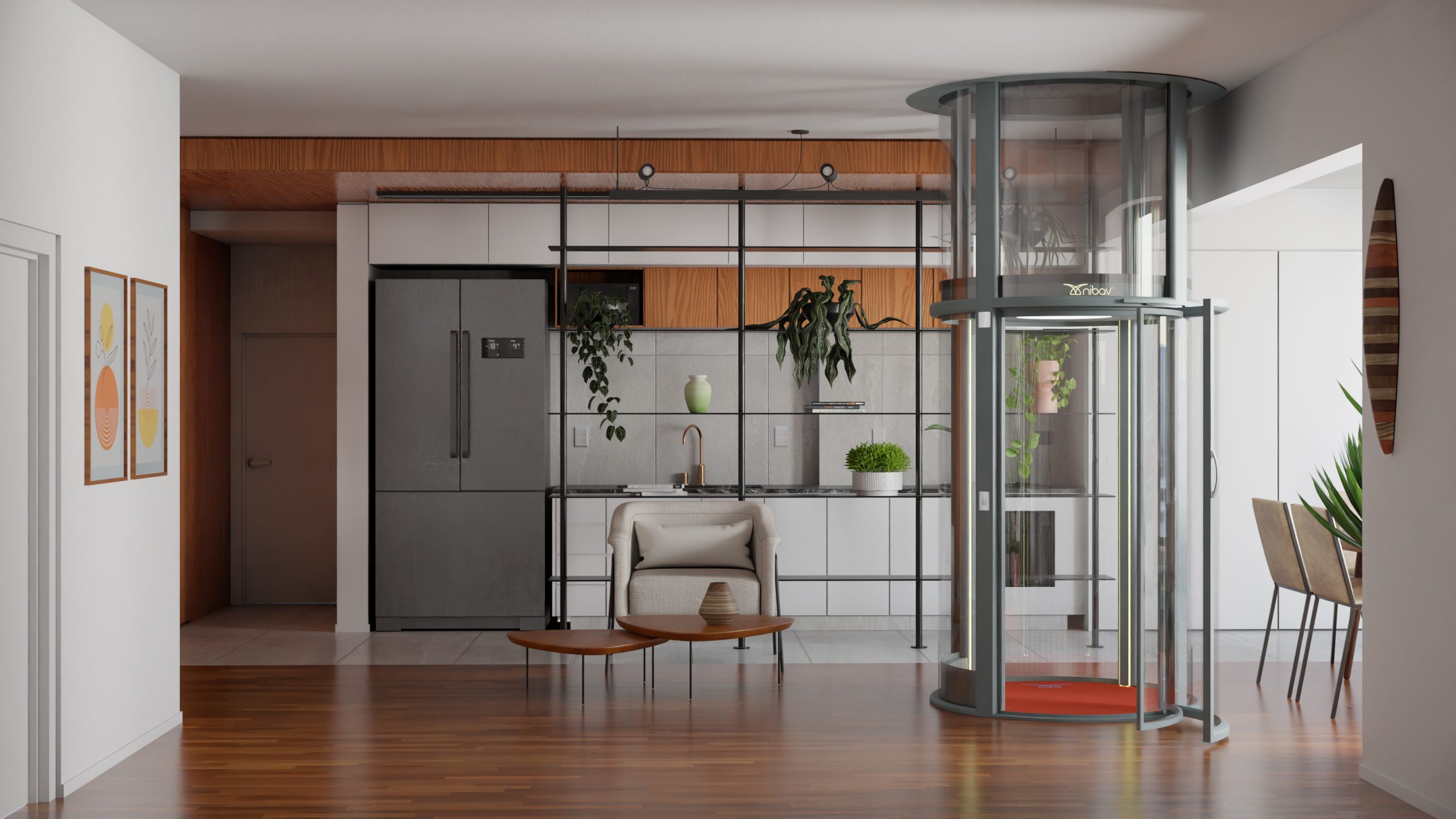
“Energy-efficient home elevators in Mexico have quickly developed into an intelligent option for families seeking comfort, safety, and smarter energy consumption. Installing a modern, low-consumption residential lift from Nibav Home Lifts Mexico offers homeowners a way to relieve unnecessary pressure on joints and stairways, reduce electricity consumption, and lower long-term carbon impact, while also improving daily accessibility.”
Table of Contents
- An Introduction to Comfort, Sustainability, and the Mexican Home
- What Makes a Home Elevator “Energy Friendly”?
- Air-Driven Technology Saves You Money
- No Pit. No Machine Room. Reduced Material. Reduced Waste.
- Engineered for Ultra-Low Noise and Exceptional Comfort
- Engineered With Complete Safety as Standard, Not Optional
- A Final Thought: Smart Mobility Is Sustainable Mobility
An Introduction to Comfort, Sustainability, and the Mexican Home
From multi-level homes in Mexico City and Guadalajara to seaside villas in Quintana Roo and hillside properties in Monterrey, Mexico is changing the way we build and live. Homes are taller, families are more often multi-generational, and accessibility is no longer a “luxury topic” — it’s part of responsible planning.
At the same time, awareness is growing around how everyday lifestyle choices affect both utility costs and environmental footprint. The question has shifted from “Do I really need this?” to “Can I get this in an energy-efficient, low-impact, future-ready way?”
This is precisely where homeowners have begun to explore energy-efficient home elevators in Mexico.
Modern residential lifts — especially air-driven systems like those from Nibav Home Lifts Mexico — are being engineered to provide vertical mobility without behaving like traditional commercial elevators. These are compact, self-contained systems designed for residences. They improve comfort, support aging in place, and align with modern expectations of sustainability.
In this article, we will explore how energy-efficient home elevators work, how they help reduce long-term operating costs, and how they support a lower-carbon lifestyle in Mexico.
What Makes a Home Elevator “Energy Friendly”?
Not all elevators are built the same. Conventional systems, such as hydraulic elevators, typically use oil-filled cylinders and often require significant energy to lift and hold a cabin in motion. They also tend to rely on dedicated machine rooms and demand structural modifications to the house.
An energy-efficient home elevator is designed for residential use from day one. The goal is simple: allow safe and comfortable movement between floors using as little energy, space, and disruption as possible.
Here are four defining traits of an energy-efficient home elevator:
- Optimized power profile
Rather than drawing high, continuous electricity, the system is designed to use controlled bursts of power, primarily during upward travel. For downward travel, the cabin is managed using balanced air pressure rather than brute mechanical force. This significantly reduces energy consumption in daily use.
- No heavy machine room
Most modern residential elevators of this class are self-supporting and do not require a large external machine room. That means no heavy extra machinery sitting elsewhere in the house, and typically no major reinforcement of the structure. Less material, less concrete, less steel, and less demolition.
- No hydraulic oil
Air-driven systems use air, not hydraulic oil. That means less mess, no recurring fluid changes, and no disposal of used oil. Cleaner design equals lower environmental impact.
- LED and intelligent cabin systems
Efficient lighting, ventilation, and control systems allow the cabin to remain comfortable, illuminated, and safe – without wasting electricity.
All of these elements work together. When you evaluate the full system, the logic becomes clear: smart mobility at home should be energy-conscious, cost-effective to operate, and should not require tearing apart half the house just to install.
Air-Driven Technology Saves You Money
When most people hear the word “elevator,” they imagine a high-rise lift going up and down all day. A home elevator does not “live” like that. A properly designed air-driven home lift (like the ones provided by Nibav Home Lifts Mexico) is engineered for occasional, intentional, personal use in a private home – not for commercial traffic.
Here is how that translates to sustainability and long-term cost savings:
1. Power is consumed mostly on the way up
During ascent, the system activates its turbines or blowers to create a pressure difference that lifts the cabin. On the way down, the cabin returns using controlled air release and natural balance, without constant energy draw. This is a major improvement over older, motor-heavy systems that consume energy in both directions.
2. Lower burden on the home’s electrical ecosystem
A compact, energy-tuned residential lift in Mexico is not an industrial machine forced into a living space. It is designed to sit comfortably within the electrical capacity of a normal home.
3. Reduced ongoing maintenance costs
Because the design does not rely on hydraulic oil or complex counterweight rigs, there are fewer consumables to replace and fewer high-wear parts to service. Over time, that saves money. Just as importantly, it also reduces waste and lowers the environmental cost of keeping the lift in operation.
4. Long usable life
Durable materials and a self-supporting structure mean the system does not constantly need to be pulled apart, reinforced, or reconfigured. A lift that can serve the home for many years – instead of being replaced early – is one of the most underrated forms of sustainability.
In short: you are not just saving money on electricity. You are reducing waste, limiting service-related material usage, and extending the practical life of the investment.
No Pit. No Machine Room. Reduced Material. Reduced Waste.
Traditional elevators often require a pit cut into the slab at the lowest level and a separate machine room. That means concrete work, steel reinforcement, dust, debris, and significant structural intervention.
Air-driven residential elevator systems from Nibav Home Lifts Mexico are self-supporting and typically do not require a pit or a dedicated machine room. These are modular systems that can be assembled in place using sections that fit through standard door openings.
Here is what that means for energy and the environment:
- Less structural demolition
Less cutting, breaking, and hauling debris to landfill. - Less new material
You avoid pouring large foundations or constructing a bulky concrete shaft. - Faster installation
Faster work means less time running heavy equipment on-site, less disruption, and less remedial finishing. - Cleaner retrofit path
This makes energy-efficient home elevators Mexico homeowners choose viable not only for new-builds, but also for renovations, upgrades to existing family homes, and architecturally sensitive properties.
This is a sustainability story hiding in plain sight: sometimes the greenest solution is the one that does not force you to destroy what already exists.
Engineered for Ultra-Low Noise and Exceptional Comfort
There is another dimension to “efficiency”: the acoustic and emotional footprint.
A well-engineered home elevator should not feel like industrial machinery. The experience is meant to be calm, predictable, and quiet enough that you can use it at night without waking someone on the next floor.
Why does that matter in a sustainability conversation?
Because sustainability is also about long-term well-being. A quiet, low-vibration ride encourages daily use across all ages. Grandparents will feel confident using it. Children will feel safe. Family members moving groceries, laundry, or luggage between floors will not feel like they are disturbing everyone.
Technology only fulfills its purpose – making the entire home accessible – if people are actually comfortable using it every day. Comfort drives adoption. Adoption drives long-term value.
Engineered With Complete Safety as Standard, Not Optional
Energy efficiency is irrelevant if the system is not safe.
A modern residential lift should treat safety as standard, not an optional extra. With Nibav’s residential systems in Mexico, you can expect:
- Automatic descent to the nearest landing in the event of a power failure
- Overload and obstruction detection to prevent unsafe operation
- Child lock / restricted access mode
- In-cabin communication, lighting, and ventilation
- Smooth start/stop and precise levelling so entry and exit feel natural and steady
These measures do more than provide convenience. They protect riders and build day-to-day trust in the system. When you trust the lift, you use it. When you use it, it delivers value. When it delivers value, it earns its place in the home.
That cycle – safety, confidence, daily use, long-term value — is what defines a true lifestyle upgrade.
A Final Thought: Smart Mobility Is Sustainable Mobility
Sustainability in Mexico is no longer only about solar panels and efficient lighting. It is also about how people move inside their own homes, how long they can remain in those homes, and how gracefully the home can serve every generation that lives there.
Energy-efficient home elevators are part of that shift.
With Nibav Home Lifts Mexico, you are not simply installing a lift. You are investing in:
- A low-consumption mobility system designed specifically for residences
- A compact, panoramic design that respects your space and aesthetic
- A safer way for every family member to move between floors
- A strategy to reduce waste, avoid heavy reconstruction, and keep living in the home you already love
The future of vertical living in Mexico is not just taller — it is cleaner, smarter, and kinder to your family, your wallet, and your environmental footprint.

Sofia P
Great article! I love how this blog highlights the energy-saving features of home elevators — especially how they help reduce electricity usage while still providing comfort and performance.
Ricardo M
Very informative! The breakdown of eco-friendly technologies and efficiency benefits makes it clear why energy-saving elevators are a smart choice for modern Mexican homes.
Valeria S
Helpful and well-written! I appreciated the focus on sustainable design and cost savings — great insights for anyone thinking about an elevator upgrade.