 By Ademm on
December 11, 2025
By Ademm on
December 11, 2025 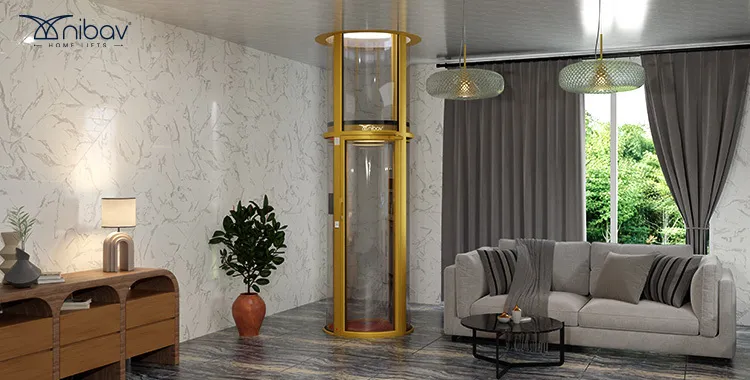
Mexico is experiencing a positive shift in how families think about and live in their houses. Small multi-level family houses are more frequently seen than ever before in urban cities such as Mexico City, Monterrey, Guadalajara, Puebla, Mérida, Querétaro, and Tijuana. Due to rising land costs, evolving styles of building and design, and the push to modernize those homes, builders are now more likely to prefer vertical homes as opposed to horizontal homes. This has pushed residential elevators down from being a luxury to becoming more of a functional item for families that prioritize ease of use, accessibility, and comfort.
In small homes where space is valuable and often not practical for a traditional elevator, selecting the right elevator option – particularly among residential elevator options for size and layout in Mexico – requires much more than simply accepting an elevator installation. The elevator options for size and layout in homes in Mexico require careful consideration and appreciation not only of the designated space for the elevator, but also of the effect the elevator will have on creating simple functionality, easiness of movement, the design of the elevator matching the home, safety features, and the ease of use within the family’s daily flow. The lift you select for your home impacts how a family member feels moving through the space, how they use the lift as they age, and the accessibility it provides during prolonged mobility limitations or restricted movement.
This guide shows how the new generation of modern-day homeowners in Mexico can choose the perfect size and layout for their home elevator, how vacuum elevators work extremely well in tighter spaces, and why Nibav’s strategic building and design have become the industry standard across Mexico for compact home mobility.
Table of Contents
- Why Planning for Your Small Home Elevator May Cost You More in Mexico
- Understanding Space Limitations in Mexican Homes
- Compact Elevators for Compact Houses
- Choosing an Elevator Size
- How Location Impacts the Layout
- Why Vacuum Elevators Are Suited Well to Small Home Layouts
- Aesthetic Features of Mexican Interiors
- Residential Lift Expenses in Mexico Explained
Why Planning for Your Small Home Elevator May Cost You More in Mexico
Generally, in Mexico, houses tend to use vertical height instead of extending outward. At present, many families live in homes across two, three, or even four levels. These layouts provide privacy and separation between rooms, and they make efficient use of land, but they also come with challenges. Stairs can be difficult for older adults, hazardous for young children, and impractical for everyday tasks such as carrying groceries, doing laundry, or moving luggage up and down floors.
For these reasons, more families are evaluating elevators in their homes as a long-term investment in comfort and accessibility. It must be noted that elevators must be well planned. Given how often the elevator will be used and the fact that houses in Mexico are traditionally small – often narrow in circulation space with tightly designed staircases—selecting an elevator system that adapts to the environment rather than requiring expensive structural changes is essential.
Nibav’s self-supporting, vacuum-driven home lifts were invented for homes just like this: small homes where every square meter is important.
Understanding Space Limitations in Mexican Homes
The first step to proper elevator selection is understanding the spatial limitations that exist in Mexican homes. Many urban houses were developed on long, narrow lots, where only a small footprint is available on each floor. Rooms are efficiently laid out, often leaving inadequate space for large mechanical equipment or bulky elevator systems. Staircases are typically tight, and landing areas are not always wide enough to accommodate a traditional elevator.
With these design constraints, the process of selecting the appropriate elevator size and design becomes an exercise in creativity���identifying where the elevator can be appropriately and conveniently placed without disturbing the natural flow of the home. You will also need to identify a system that is small enough, compact enough, light enough, and visually open enough – qualities that, when engineered correctly, make a major difference in usability and comfort.
Compact Elevators for Compact Houses
Traditional elevators do not typically fit well in compact residential spaces. Hydraulic lifts require pits and machine rooms, while traction elevators depend on steel cables, heavy counterweights, and reinforced walls. These systems require substantial construction – far too much for the limited space available in many Mexican homes.
The beauty of vacuum elevators comes from their simplicity. Their round, self-sufficient structure means that pits and shafts are generally not necessary, allowing the elevator to sit lightly within the current footprint of the home. Atmospheric pressure moves the cabin, eliminating the need for bulky mechanical components and making the vacuum elevator a great addition to any home without sacrificing valuable space.
Choosing an Elevator Size
When considering possible home elevator size and layout in Mexico, homeowners need to assess the space available on each floor, as well as their ongoing mobility needs. A compact elevator may be perfect for individuals or couples, while larger cabin sizes may be needed to accommodate wheelchairs, strollers, or multiple family members across generations.
In several Mexican homes, the right elevator size will likely depend on four factors:
- The size of the space available on each floor
- The number of people expected to use it at one time
- Accessibility requirements to ensure ease of use
- A vision for the future of the home
For example, a family with aging grandparents or young children would likely prefer a slightly larger cabin for convenience and safety. A forward-thinking family planning for “aging-in-place” would choose a size that comfortably accommodates a wheelchair or future mobility device. Younger families living in smaller apartment-style homes may choose a smaller elevator footprint that blends seamlessly into the interior design.
The objective is to achieve a balance: selecting a cabin that allows for comfortable travel without being disruptive to the home’s layout and architecture.
How Location Impacts the Layout
After identifying the ideal size and cabin style, the next step is deciding where to locate the elevator. The location heavily affects how well the elevator integrates into daily life. The most typical and effective strategy in small homes is placing the lift adjacent to the staircase. Staircases already occupy vertical space, so placing the elevator nearby helps maintain intuitive movement and minimizes structural adjustments.
In some cases, homeowners prefer installing the elevator in a corner of the living room. This placement works especially well in Mexico’s open-plan homes and gives the lift dual value – as both a functional device and a visual design feature. With Nibav’s panoramic cabin, the lift enhances the airy, spacious feel of the home.
When indoor space is extremely limited, homes can benefit from outdoor installation. Many Mexican homes include elevated terraces or balconies that connect upper floors. Installing the lift outdoors conserves interior space while still providing seamless vertical movement.
Hallways, entrances, and unused voids are also common and effective placement options, as they keep the lift accessible without interrupting daily living patterns.
Why Vacuum Elevators Are Suited Well to Small Home Layouts
Nibav vacuum elevators, when constructed properly, naturally suit small homes in Mexico because they do not require traditional construction. Their lightweight structure allows installation on any finished level without the need for reinforced beams. Unlike conventional square-shaft elevators, their circular design occupies significantly less area. Additionally, their transparent cabin visually expands the room instead of making it feel smaller.
Vacuum elevators also offer flexibility in door orientation. Based on your home’s layout, you can configure the entry and exit to face forward, sideways, or – depending on the model – on opposite sides. This flexibility allows homeowners to maintain smooth circulation and optimize their interior flow.
Best of all, vacuum elevators are exceptionally quiet and operate smoothly, ensuring that even small homes maintain a peaceful atmosphere.
Aesthetic Features of Mexican Interiors
Mexican homes are vibrant and expressive, combining cultural heritage with modern architectural touches. Nibav’s sophisticated vertical lift pairs beautifully with earthy terracotta tones, sleek modern whites, rustic finishes, industrial textures, and traditional Mexican décor. The panoramic cabin enhances the openness and light within the home, making even small areas feel spacious.
As a visual element, the lift becomes an architectural feature and a symbol of prestige.
Residential Lift Expenses in Mexico Explained
One of the most discussed topics for homeowners is the cost of installing a home elevator. The residential lift cost depends on a variety of factors, including travel height, cabin size, customization options, door configuration, and installation specifics. New vacuum elevators significantly reduce construction costs because they do not require pits or enclosures.
This makes them a cost-effective option for families seeking long-term comfort without major renovation.
Energy and maintenance costs are also far lower than those of conventional elevators, making vacuum lifts a sustainable and economical long-term choice.
Conclusion
Modern homes in Mexico deserve elegant, functional, and purpose-built mobility solutions. With the right lift size and design, homeowners can transform their living spaces into smarter, safer, and more comfortable environments. Nibav Home Lifts brings this to life with compact, airy, panoramic lifts specifically engineered for small Mexican homes.
Choosing the right elevator is no small feat—it is elevating the entire way you live.

Emilio G
Great article! This blog is really helpful for understanding how home elevators can fit perfectly into small house layouts — the space-saving tips are especially useful.
Daniela F
Very informative! I liked how it explains the ideal size options and layout considerations — makes planning a home elevator much less overwhelming.
Jorge R
Helpful and well-written! The focus on fitting elevators into compact homes without compromising design makes this guide great for urban homeowners.